Leah MacKenna
Slow BurnLeah MacKenna is defined in the family history by two consequential acts: she married Conal Thomas MacKenna despite his father’s disapproval, and, after Conal’s death, she raised their three daughters while working to keep the family housed and educated. Her later loan against the family’s assets created a financial crisis that reached her daughter Kate MacKenna’s company.
Marriage and Family Conflict
Leah married Conal Thomas MacKenna, the younger son of Robert Duncan MacKenna. Robert had chosen a different match for his son, a woman from an influential family, and disowned Conal when he married Leah, whom he considered to have no social standing. In the account later given by Compton Thomas MacKenna, the conflict exposed the family’s insistence on status and obedience: Conal accepted the loss of his inheritance rather than abandon his marriage.
Compton’s recollection also records his own class-bound view of Leah. He described her in contemptuous terms, but the account offers no independent basis for treating that judgment as fact. His narration instead shows how sharply the family’s expectations of social standing shaped its response to Conal’s choice.
Widowhood and Raising Her Daughters
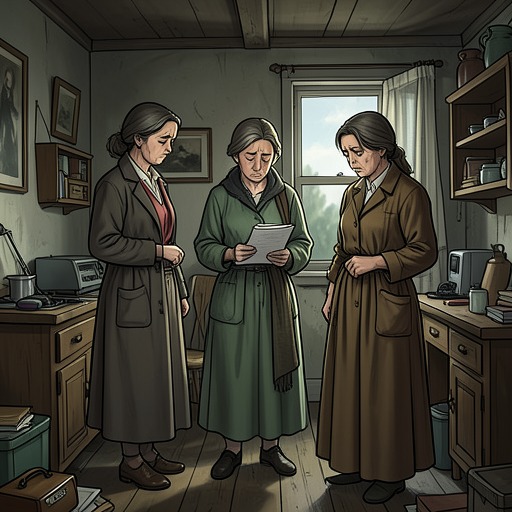
After Conal was killed in a car accident, Compton attended the funeral without telling Leah or the rest of the family that he was there. He kept his distance, saw the crowded church, and later saw Leah at the cemetery with her three young daughters; the youngest was still a baby. He remembered the scene chiefly as evidence that the MacKenna line would continue through Conal’s children, rather than as an encounter with the bereaved family.
The accident left Leah responsible for the girls. An insurance settlement allowed her to remain in the family home, and she took a secretarial position at a girls’ private school. The salary was modest, but the school waived tuition for all three daughters, who attended its lower and upper schools. Compton, who had expected the family to live in poverty and the girls to receive little education, acknowledged that his assumptions had been wrong. His later investigation found that all three worked hard and pursued their education; their achievements therefore stand against the dismissive expectations he had initially held for them.
The Loan and Its Consequences
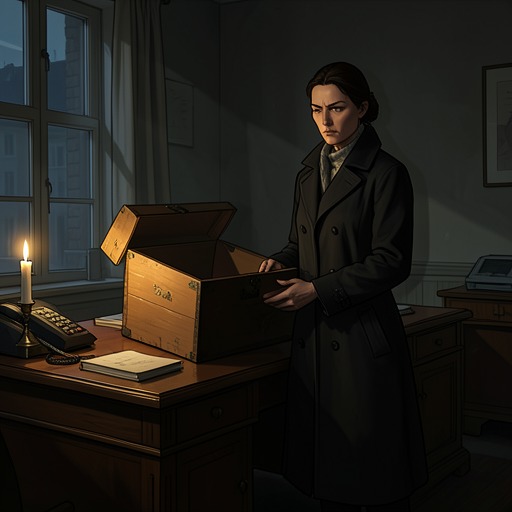
Years later, Kate MacKenna discovered that her mother had taken out a three-year loan with a balloon payment of almost $300,000 due in four weeks. Leah had pledged everything she owned as collateral, leaving the family’s assets at risk if the payment was not made. Among those assets was Kate MacKenna’s candle and fragrance company, as well as the family name attached to it.
The crisis came to light when Kate found her mother’s distinctive signature on the loan documents. At that point, the family had no pension, trust, insurance money, or savings available to meet the payment. The earlier insurance settlement after Conal’s accident had once helped Leah keep the home; it did not protect the family from this later debt. The evidence establishes the scale and immediate deadline of the obligation, but does not establish Leah’s reasons for taking it out.
Legacy and Narrative Significance
Leah’s story is carried largely through the judgments and discoveries of others: Compton first sees her as an outsider who married against family preference, then learns that she raised capable, educated daughters; Kate later encounters the financial consequences of her mother’s borrowing. Those accounts place Leah between the family’s old concern with status and the practical work of sustaining a household after loss.
Her legacy is therefore mixed rather than settled. The school arrangement and the daughters’ education show how she made limited resources serve the family, while the later collateralized loan threatened the home and Kate’s business. The account does not explain the loan’s purpose or Leah’s thinking, leaving the financial decision consequential but unresolved.